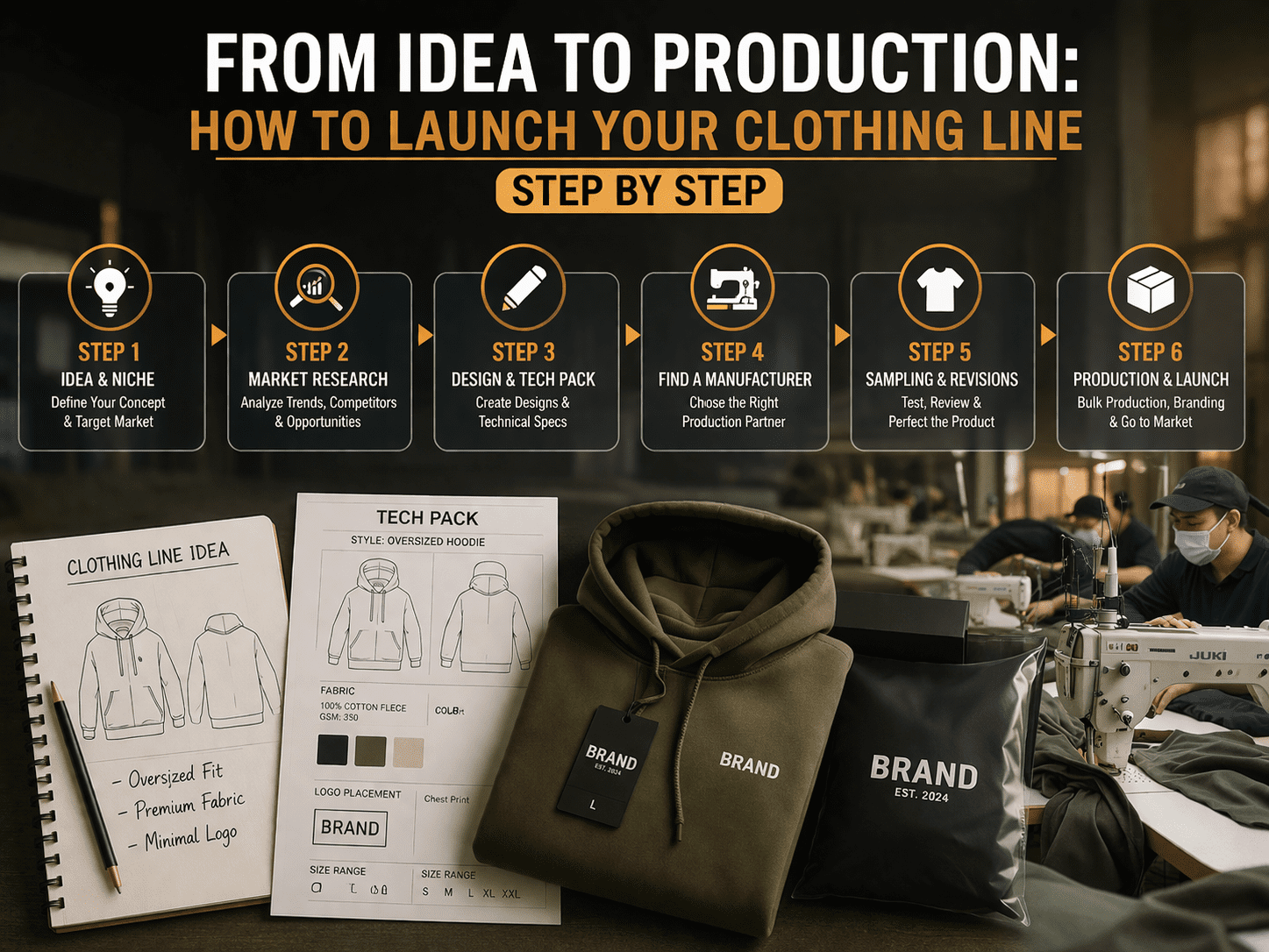
Starting a clothing brand sounds simple on the surface, but the gap between having an idea and getting a finished product in your hands is where most people get stuck. Some overthink every detail and never move forward, while others rush into production and end up with products they cannot sell.
The difference between those who succeed and those who struggle is not creativity, it is clarity and execution. If you understand the process and follow it step by step, launching a clothing line becomes much more predictable.
This guide walks you through the complete journey, from idea to production, using a practical approach that aligns with how real brands operate in today’s market.
Why Most Clothing Brands Fail Before Production
Before we get into the steps, it is important to understand where things usually go wrong. Many beginners assume that starting a clothing brand is mainly about design and marketing. In reality, the biggest problems appear during product development and manufacturing.
Common issues include unclear product direction, poor communication with manufacturers, weak sampling processes, and underestimating costs. These problems compound over time and eventually lead to delays, inconsistent quality, or complete project failure.
When you approach this process with structure, you avoid these pitfalls and build a foundation that can actually scale.
Step 1: Define Your Product and Niche Clearly
The first step is not creating a logo or launching a website. It is defining exactly what you are going to sell and who it is for. Without this clarity, every decision that follows becomes harder.
Instead of saying “I want to start a clothing brand,” narrow it down into something specific and actionable. Think in terms of product category, target audience, and positioning.
For example, you might be building:
- A gym apparel brand focused on performance wear
- A sports team uniform line with custom designs
- A private label streetwear brand with minimal aesthetics
- A workwear program for businesses
When your niche is clear, your messaging becomes stronger and your product decisions become easier.
If you’re building sports or fitness clothing brands, your product needs will be different.
Step 2: Conduct Market Research That Actually Helps
Once your idea is defined, the next step is understanding the market you are entering. This does not require complicated tools. What matters is observing what already exists and identifying gaps.
Search for brands in your niche and analyze their products, pricing, and positioning. Look at customer reviews to understand what people like and what they complain about. These insights are far more valuable than generic advice.
Pay attention to:
- Price ranges in your category
- Fabric expectations and quality standards
- Fit preferences and sizing issues
- Common complaints about durability or comfort
This step helps you avoid repeating mistakes that others have already made.
Step 3: Create Designs That Can Be Manufactured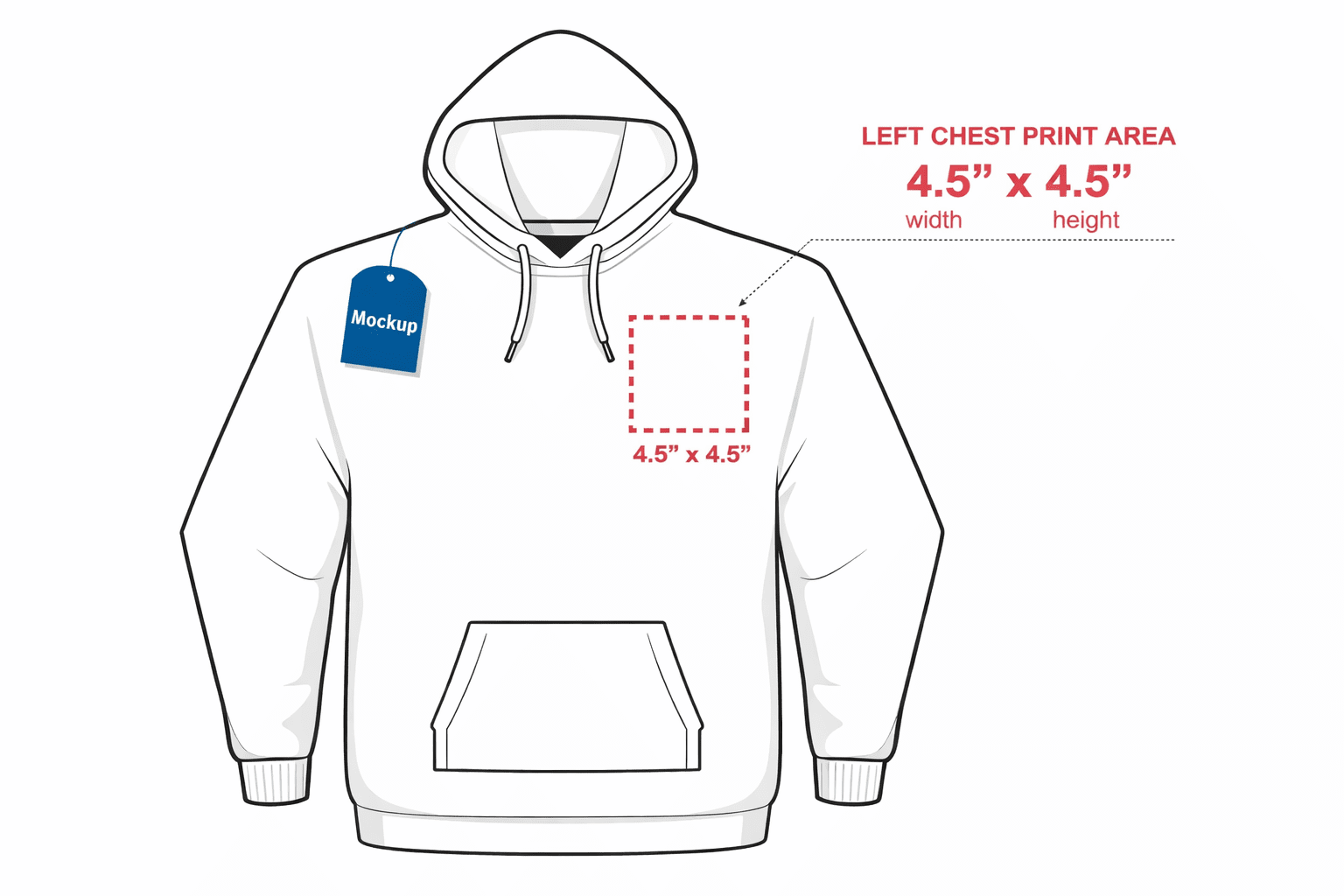
Design is where most people focus their energy, but it needs to be grounded in reality. A design that looks great on a screen is not always easy to produce in a factory setting.
The goal is to create designs that are both visually strong and technically feasible. This means understanding how printing, embroidery, and fabric limitations affect the final product.
Effective design usually involves:
- Clean and intentional logo placement
- Simplicity that translates well into production
- Awareness of printing or embroidery limitations
Overly complex designs often lead to higher costs, production errors, and inconsistent results.
Step 4: Build a Proper Tech Pack
A tech pack is one of the most important documents in apparel manufacturing, yet it is often ignored by beginners. It acts as a blueprint that tells the manufacturer exactly how to produce your garment.
Without a tech pack, you are relying on assumptions, and assumptions lead to mistakes.
A complete tech pack typically includes:
- Garment measurements and sizing details
- Fabric type and GSM specifications
- Stitching instructions and construction details
- Logo placement and branding elements
- Color references and trims
The more detailed your tech pack is, the fewer revisions you will need later.
Step 5: Find the Right Clothing Manufacturer
Choosing the right clothing manufacturer is one of the most important decisions in this entire process. The manufacturer you choose will directly affect your product quality, timelines, and overall experience.
Instead of rushing into this step, take the time to evaluate different options. Look for a manufacturer who understands your product category and communicates clearly.
A strong manufacturer will:
- Ask relevant questions about your product
- Guide you on materials and production methods
- Provide a structured sampling process
- Maintain consistent communication
Avoid making decisions based only on price. A cheaper manufacturer can become expensive if quality issues arise.
Step 6: Sampling Is Where Your Idea Becomes Real
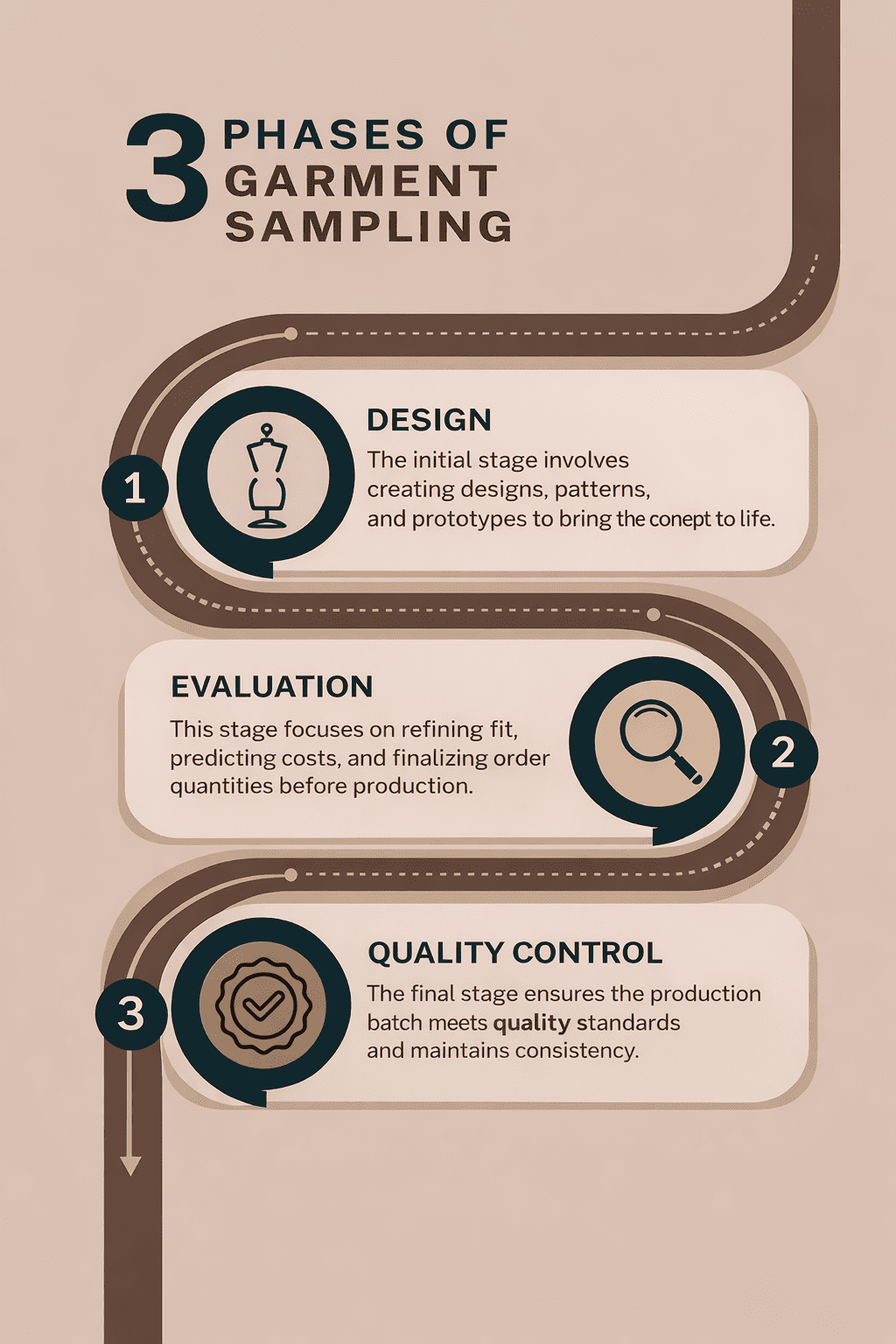
Sampling is the stage where your concept turns into a physical product. This is also where you start seeing the difference between a good manufacturer and an average one.
When you receive your sample, evaluate it carefully. Look at how the fabric feels, how the stitching holds, how the print or embroidery appears, and how the garment fits.
It is important to understand that your first sample may not be perfect. This is a normal part of the process. What matters is how efficiently the manufacturer handles feedback and revisions.
Focus on:
- Fabric quality and accuracy
- Fit and sizing consistency
- Print or embroidery execution
- Overall finishing
Sampling should be treated as a collaborative process, not a one-time step.
Step 7: Understand Costing and Build a Pricing Strategy
Before moving into bulk production, you need a clear understanding of your costs. Many new brands underestimate this step, which leads to pricing issues later.
Your total cost per unit is not just the manufacturing price. It includes packaging, shipping, marketing, and other operational expenses.
When setting your price, you need to ensure that it covers:
- Production costs
- Marketing expenses
- Profit margins
- Future growth
Pricing too low may help you sell initially, but it will limit your ability to scale.
Step 8: Move Into Bulk Production With Clarity
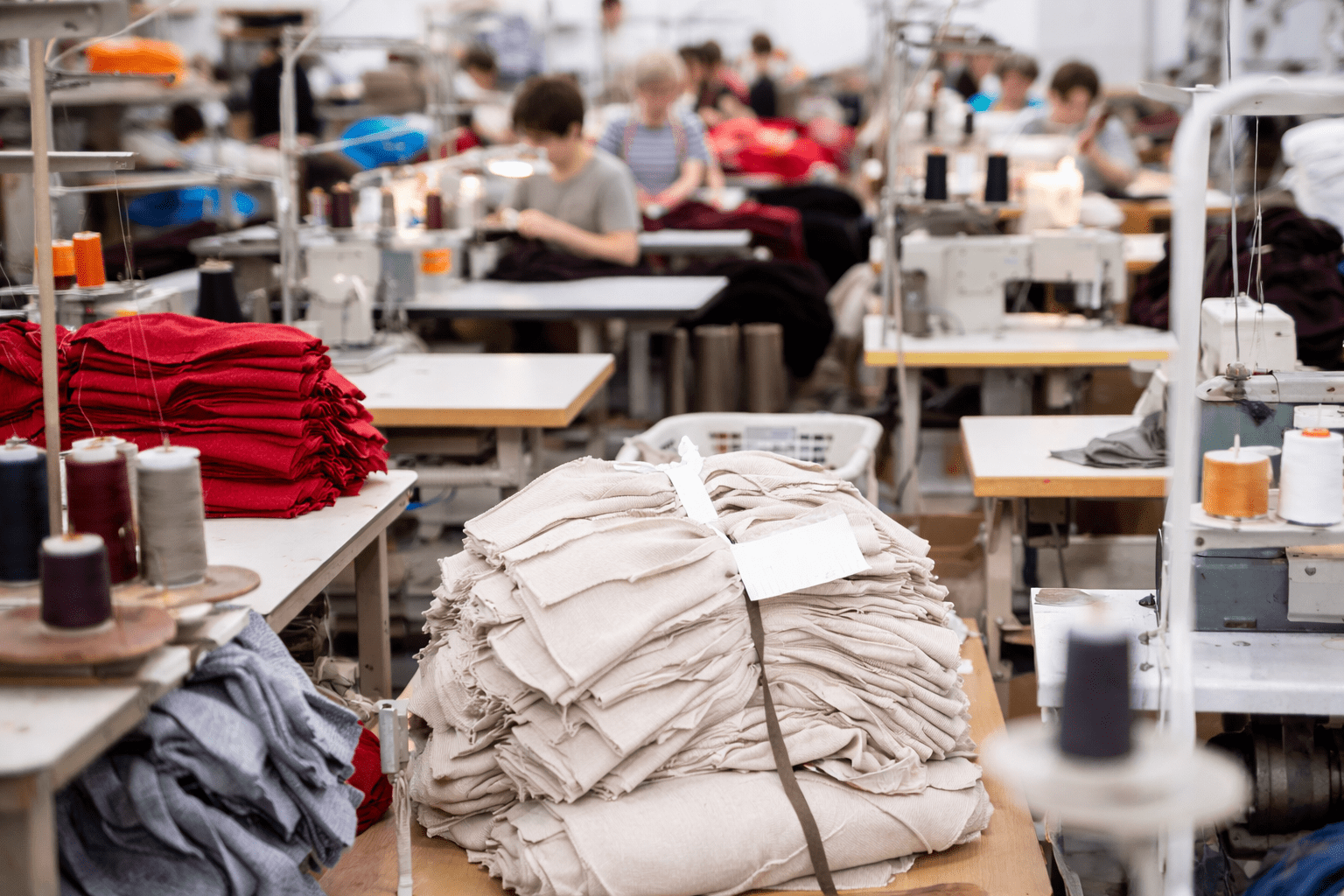
Once your sample is finalized, you move into bulk production. This is where execution becomes critical.
Production involves multiple stages, including fabric sourcing, cutting, stitching, printing or embroidery, finishing, and packaging. Each stage needs to be handled carefully to maintain consistency.
To keep things smooth:
- Maintain clear communication with your manufacturer
- Request updates during production
- Confirm timelines and expectations
Assuming everything will go perfectly without follow-up often leads to avoidable issues.
Step 9: Focus on Branding and Packaging
Your product is not just the garment itself. The way it is presented plays a significant role in how customers perceive your brand.
Branding elements such as labels, hang tags, and packaging create a complete experience. Even a well-made product can feel average if the presentation is weak.
Strong branding includes:
- Custom woven or printed labels
- Clean and consistent hang tags
- Thoughtful packaging design
These details help your brand stand out and feel more professional.
Step 10: Launch and Start Selling
Once your products are ready, the next step is launching your brand. This is where your preparation starts to pay off.
You can sell through:
- Your own website (Shopify or similar platforms)
- Social media channels like Instagram or TikTok
- Online marketplaces
Successful launches usually involve:
- High-quality product photos
- Clear brand messaging
- Consistent content
Launching without preparation often leads to poor first impressions.
Common Mistakes to Avoid
Even with a clear process, certain mistakes can still slow you down if you are not careful.
These include:
- Rushing into production without proper sampling
- Choosing a manufacturer based only on price
- Ignoring product quality and durability
- Lacking clear brand positioning
- Underestimating total costs
Avoiding these mistakes can save you significant time and money.
What a Smooth Clothing Brand Launch Looks Like
When everything is done correctly, the process feels structured and manageable. Your samples align with your vision, your production runs smoothly, and your final products meet the quality you expected.
Instead of dealing with constant issues, you are able to focus on growing your brand, building your audience, and improving your product line.
This is the difference between guessing your way through the process and following a system that works.
Final Thought
Launching a clothing line is not about doing everything perfectly from the start. It is about understanding the process, making informed decisions, and working with the right partners.
When you approach it step by step, with clarity and patience, the entire journey becomes much more predictable and less stressful.
Looking for a Reliable Clothing Manufacturer?
If you are planning to start a clothing brand and want a partner who can guide you from idea to production with clarity and consistency, FRK Industry is built for that purpose.
We focus on structured processes, clear communication, and reliable execution so you can focus on building your brand without unnecessary stress.
If you are ready to move forward, you can reach out and start the conversation.